Introduction
Legal education is not limited to learning laws from textbooks. It also involves developing practical skills such as legal research, drafting, advocacy, critical thinking, and public speaking. One of the most effective methods used by law schools to provide practical legal training is the Moot Court. Moot courts bridge the gap between theoretical knowledge and practical application, preparing students for real-life legal practice.
What is a Moot Court?
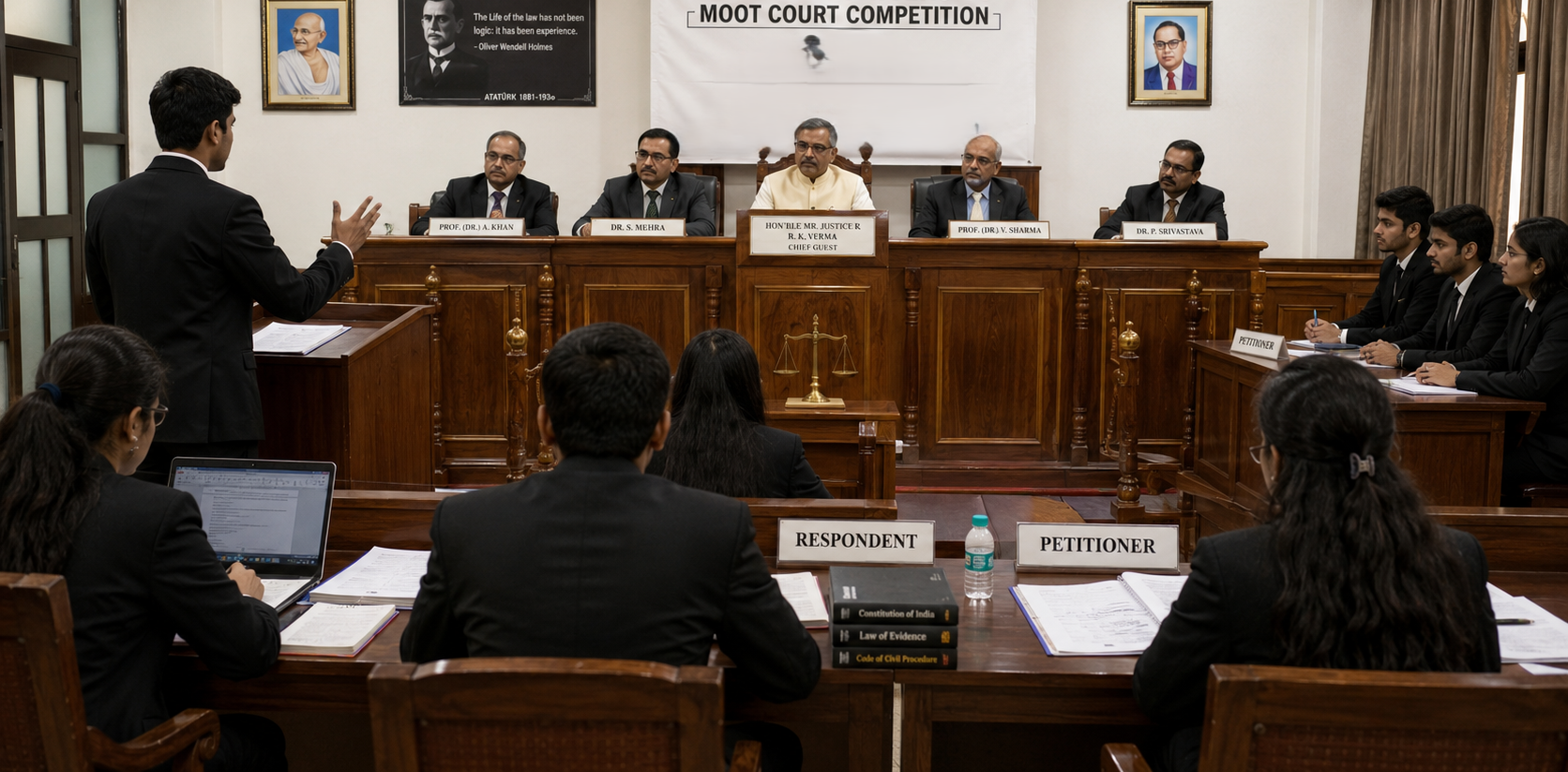
A Moot Court is a simulated court proceeding in which law students argue fictional legal cases before a panel of judges. Participants assume the roles of lawyers representing either the petitioner/appellant or the respondent. They research legal issues, prepare written submissions known as memorials, and present oral arguments based on legal principles, statutes, and judicial precedents.
Unlike a mock trial, a moot court generally focuses on legal arguments rather than witness examination or factual disputes. The primary objective is to develop students’ understanding of legal reasoning and courtroom advocacy.
Objectives of Moot Court
The main objectives of moot court activities are:
- To provide practical exposure to court procedures.
- To improve legal research and analytical skills.
- To develop persuasive oral advocacy techniques.
- To enhance legal drafting abilities.
- To build confidence in public speaking and argumentation.
- To encourage teamwork and professional ethics.
Importance of Moot Court in Universities and Colleges
1. Enhances Practical Legal Knowledge
Moot court enables students to apply theoretical concepts learned in classrooms to practical legal problems. It helps them understand how laws are interpreted and enforced in actual legal proceedings.
2. Develops Research Skills
Participants must conduct extensive research on statutes, case laws, constitutional provisions, and legal doctrines. This strengthens their ability to analyse complex legal issues and formulate sound arguments.
3. Improves Advocacy and Communication Skills
Effective communication is essential for every lawyer. Moot court provides students with opportunities to present arguments before judges, answer questions confidently, and improve their public speaking abilities.
4. Encourages Critical Thinking
Students learn to evaluate different perspectives of a legal issue, identify strengths and weaknesses in arguments, and develop logical reasoning skills necessary for legal practice.
5. Builds Professional Confidence
Standing before judges and defending legal positions helps students overcome stage fear and gain confidence, which is crucial for future careers in litigation, judiciary, corporate law, and public service.
6. Promotes Teamwork and Leadership
Moot court competitions usually involve teams. Students learn collaboration, time management, leadership, and problem-solving while working together to prepare their cases.
7. Improves Career Opportunities
Many law firms, corporate legal departments, and judicial institutions value moot court experience. Success in moot court competitions demonstrates strong legal skills and often enhances employment prospects.
8. Familiarizes Students with Courtroom Etiquette
Moot court teaches students proper courtroom behaviour, professional ethics, legal decorum, and respect for judicial institutions, which are essential qualities of legal professionals.
Benefits for Students
- Better understanding of legal principles.
- Improved research and writing abilities.
- Enhanced confidence and communication skills.
- Exposure to professional legal environments.
- Opportunities to network with judges, lawyers, and legal experts.
- Stronger resumes and career prospects.
Challenges Faced in Moot Court
While moot courts offer numerous benefits, students may face challenges such as extensive research requirements, time constraints, intense competition, and pressure during oral arguments. However, overcoming these challenges contributes significantly to personal and professional growth.
Conclusion
Moot Court is an indispensable component of modern legal education. It provides law students with a platform to transform theoretical knowledge into practical expertise. Through research, drafting, advocacy, and courtroom simulations, moot courts prepare students for the realities of the legal profession. Universities and colleges should continue to encourage active participation in moot court activities, as they play a vital role in shaping competent, confident, and ethical legal professionals for the future.